Watch someone laugh in bright sunlight and you see it happen: the outer corners of the eyes fold into tiny fans of lines. Crow’s feet tell stories about expression and time, but they can also set a tired or weathered tone that doesn’t match how you feel. The goal with Botox along the eye area isn’t a frozen mask, it’s a softer edge that keeps the character of your smile. Done well, the result looks like you on a rested day.
What crow’s feet really are, and why they show earlier than other lines
Crow’s feet are dynamic lines, formed by the orbicularis oculi muscle squeezing the eyelid and pulling the skin toward the temples during smiling, squinting, and laughing. Because the skin around the eye is thinner than elsewhere on the face, the lines etch early. Sun exposure, smoking, and frequent squinting accelerate the pattern. Genetics sets the baseline, but lifestyle writes the script.
I often meet patients who tell me their first fine lines appeared in their late 20s during a ski season or after a move to a sunnier city. They notice the shift most in photos. At rest, the lines barely show. In motion, they fan wider and stick around a beat longer after the smile fades. That lingering imprint is the sign that an injectable wrinkle relaxer, rather than skincare alone, will make a meaningful difference.
Why Botox is the tool of choice here
Botox, a neuromodulator derived from botulinum toxin type A, temporarily relaxes muscle activity. For crow’s feet, that means reducing the strongest squeeze at the outer eye so the skin doesn’t pleat as hard with every expression. Think of it as easing the volume on a speaker, not switching it off. When the dose and placement are right, you can still smile fully, but the skin forms fewer sharp creases.
Topical creams help texture and pigment, fillers replace volume deficits, and lasers resurface. None of those directly quiet the muscle contractions responsible for dynamic wrinkles at the canthus. That is where cosmetic botox injections shine. As an injectable anti wrinkle therapy, Botox targets the driver of the line rather than only the surface.
How a skilled injector protects your smile
Technique is everything. The orbicularis oculi wraps around the eye like a horseshoe. If you relax too much of it or miss the right depth, you risk smiles that feel tight or an eyelid that feels heavier. The right approach respects the smiles you make on purpose and the squints you make without thinking.
I start with a candid expression check. Big grin with teeth, soft smile, hard squint in bright light. I mark where the lines appear in motion, then map three to five micro-points per side. Precision botox injections along the lateral orbicularis at shallow depth, with a conservative starting dose, tend to keep animation intact. Strategic botox placement often means skipping any injection that sits too close to the zygomatic complex on patients who already have midface volume loss, since it can accentuate flattening.
A soft botox approach uses fewer units in the first session, with the option to add. It is easier to top up than to wait out an over-relaxed area. For patients who give a powerful squint, a non-diffusing brand or smaller aliquots spaced slightly wider can maintain nuance while smoothing the skin.
The dose question: real numbers that guide expectations
Most people do well with 6 to 12 units per side for crow’s feet. Lighter lines on younger skin may need 4 to 6 units per side, while strong male orbicularis muscles, sun damage, or deeper etched lines can push the total higher. I avoid reflexively copying forehead or frown line dosing here. The tissue is different, the goals are different, and the consequences of overshooting are more visible around the eyes.
If you’ve had botox shots for forehead lines or frown lines before, expect a different feel at the eye. Forehead dosing balances brow lift vs. heaviness. Crow’s feet dosing balances smile freedom vs. skin pleating. The calculus changes with every face.
What a first-time plan looks like
During a botox injection consultation, I ask about work and social schedules, upcoming events, habitual sunglasses use, and prior experiences with injectable aesthetic treatment. Photos help. I like to see how your lines print in candid lighting. If this is your first time botox treatment for the eyes, the session usually takes 10 to 15 minutes after planning.
Here is how the pathway typically unfolds:
- Before the botox injection appointment: Arrive with clean skin. Skip heavy eye cream that morning. If you bruise easily, avoid fish oil, high-dose vitamin E, and NSAIDs for a few days prior if your medical history allows. During treatment: We confirm the smile-squint pattern, place a handful of tiny injections per side, and apply brief pressure. Most describe it as quick pinches. Aftercare: No rubbing around the eyes for the rest of the day. Keep your head elevated for several hours. Skip hot yoga and saunas until tomorrow.
Expect onset in 3 to 5 days, with peak effect around day 10 to 14. If we’ve planned conservative botox treatment, a short follow-up at two weeks lets us fine tune with targeted botox injections where needed. That edit pass often separates good from great.
Natural still means expressive
People fear two outcomes: looking frozen or looking “done.” Neither is inevitable. Natural looking botox starts with the injector’s choice to preserve certain muscle vectors. I often leave a small sliver of activity at the upper lateral fibers to keep a smile crinkle, which reads friendly and human. Balanced botox results come from leaving deliberate islands of movement rather than flattening the whole horseshoe of the orbicularis.
Subtle botox results do not mean invisible. Friends may say you look rested, makeup sits smoother at the outer eye, and you need less concealer to hide makeup creasing. If someone comments that you look “different,” the dose or diffusion may be off, or your baseline anatomy may call for a more customized plan.
How long it lasts and what maintenance looks like
For most patients, crow’s feet smoothing lasts about 3 to 4 months, sometimes up to 5. The range depends on metabolism, dose, brand, and how animated you are. Routine botox injections two to three times a year maintain the effect. Some prefer maintenance botox injections at smaller, more frequent doses to keep the curve steady instead of swinging between on and off.

Preventative botox injections are a valid strategy if you’re seeing lines etch at rest in your late 20s or early 30s. Early, conservative dosing can slow the engraving process. I don’t push this on everyone. If your lines are purely dynamic and your skin bounces back at rest, precision in sunscreen use and a pair of polarized sunglasses may buy you time before you need an injectable cosmetic solution.
Edge cases and when Botox is not enough by itself
A few scenarios need careful judgment:
- Static creases that persist even when you gently stretch the skin sideways often reflect etched-in damage. Botox line relaxation will help prevent further folding, but you may also need resurfacing, such as fractional laser, or a low-viscosity hyaluronic acid microdroplet strategy to support the dermis. Combining injectable facial treatment with energy devices is common, but timing matters. I space laser at least two weeks away from injections in most cases. Hollowing at the outer orbit or temple shadowing can make the area look more tired regardless of wrinkle depth. Injectable facial smoothing in the form of light filler, placed away from high-risk zones and with a physician guided botox and filler plan, can restore the frame. Safety first. The lateral brow and temple have vascular structures that demand an experienced botox provider and a careful filler strategy. Eyelid heaviness or hooding may worsen if you already have low brow position and you over-relax the orbicularis. Here, an aesthetic botox expert may adjust with subtle lifting action via the frontalis or skip crow’s feet treatment altogether and focus on brow shaping. Festooning or malar edema increases with any treatment that shifts fluid dynamics. If you retain under-eye fluid in the mornings, a soft botox approach at the outer eye may be fine, but avoid medial or sub-ocular injections that could worsen swelling.
Safety realities: what to expect and what to avoid
Bruising happens, usually as small freckles that fade in a week. Mild tenderness around injection points for a day is common. Headaches are rare in the crow’s feet zone compared to forehead treatments. Asymmetry can occur if your smile itself is asymmetric, which many are. A small adjustment on one side at the follow-up usually solves it.
True complications are uncommon with clinical botox provider oversight. Diffusion into the zygomaticus can dampen smile lift, which feels odd but resolves as the product wears off. Eyelid ptosis is exceedingly rare from lateral eye injections and is usually tied to medial placement or brow work. Infection risk is low with standard antiseptic prep.
Choose a licensed botox professional and a certified botox injector who sees a high volume of periorbital work. An experienced botox provider will discuss your expression style, not just your lines. Look for a botox injection practice or botox injection clinic that photographs their own before and afters and can talk through why they chose each injection point, not just how many units they used.
Custom plans beat cookie cutters
Two patients, both 38, can need completely different plans. One might need custom botox injections with a focus on the lower lateral fibers due to a cheek-dominant smile. Another might benefit from personalized botox injections that spare the upper lateral fibers to maintain a friendly crinkle for a client-facing job. Strategic tweaks make results believable.
I also adjust based on sports and habits. Cyclists and runners who squint in wind and sun benefit from strong polarized eyewear, which supports injectable aging prevention by reducing squint triggers. Night shift workers with fluid shifts may need lower dose and more spacing between points to avoid pooling.
The skincare that supports your injections
Botox does not replace good skin care. It creates a quieter canvas. Retinoids at night, vitamin C in the morning, and strict UVA/UVB protection reduce the rate at which lines etch deeper. Around the eye, choose a retinoid strength you can tolerate, even if that means only every third night. Peptides and light humectants help makeup lay flat over softened lines. For melanin-rich skin that hyperpigments easily, a steady sunscreen habit prevents contrast between softened texture and stubborn sun spots.
Avoid rubbing at the eye when applying products. Pat creams inward to outward, and skip heavy occlusives that migrate into the lash line if you have a tendency toward puffiness. These simple changes enhance botox wrinkle reduction and botox facial smoothing in daily life.
Where Botox stops and other tools begin
When patients come in asking for “just Botox” and point to the entire under-eye, we talk boundaries. Medical botox injections shine in the lateral crow’s feet. Under-eye crepe, tear trough hollowing, and skin laxity fall under a different toolbox: energy devices, collagen stimulation, or carefully placed filler by a trained botox specialist who also understands periorbital anatomy. A physician guided botox plan often pairs with staged adjuncts over several months for refined botox injections that respect anatomy.
If rosacea, eczema, or chronic dermatitis affect the eyelids, stabilize the skin first. Inflamed skin tolerates needles and neuromodulators less predictably. A clinical botox provider should be comfortable delaying treatment if the skin barrier is compromised.
Managing expectations: what changes, what does not
Botox anti aging solution is a misnomer if you expect it to erase time. It softens dynamic lines, prevents deeper etching, and helps makeup sit better. It won’t lift significant laxity, fill a hollow, or remove pigmentation. It will not stop you from smiling hard in sun without sunglasses, which is why behavior and environment matter.
When someone says they want “no lines at all,” we talk about the uncanny valley of the periocular area. Total stillness around the eyes unsettles the viewer. The best compliment after expert botox injections is not “I can’t see any lines,” it is “You look awake and happy.”
On brand choice and diffusion
Different brands of neuromodulator have different accessory proteins, unit potencies, and diffusion characteristics. In practice, a skilled injector achieves comparable results with any of the FDA-cleared options by adjusting units and spacing. For crow’s feet, I care most about predictable onset and controlled spread. Precision botox injections rely more on the injector’s mapping than on the logo on the vial.
If you have a history of faster metabolism or short-lived results, mention it. Long lasting botox injections are relative. Sometimes shifting the grid or increasing units slightly at the densest contraction point extends the tail of effect by several weeks.
What it feels like to live with it
Most patients stop noticing the treatment after the first week. You still smile in photos. You still squint to read a distant sign, though you may catch yourself doing it less. Eye makeup creases less at day’s end. botox injections MI alluremedical.comhttps Sunglasses feel more helpful than before because you no longer rely on deep squinting as a reflex against light. You schedule your next visit on your calendar, usually around the 12 to 16 week mark, and the pattern becomes part of routine self-care.
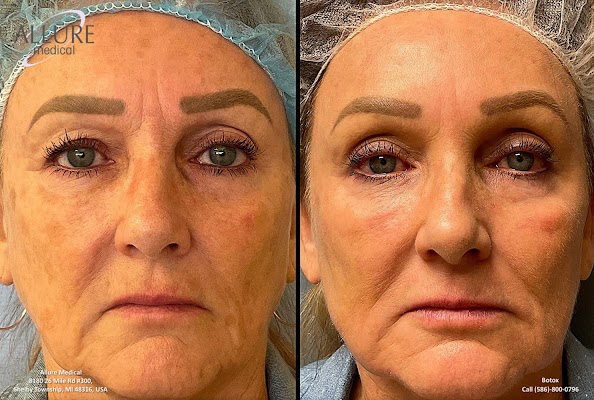
Anecdotally, patients who travel a lot or speak on stage appreciate how botox facial rejuvenation reads on camera. High-resolution lenses exaggerate fine lines, and smoothing the lateral eye softens the way studio lights carve the face. The key, again, is restraint so that expression still carries across.
Choosing the right provider and setting
Whether you book at a botox injection center, botox injection office, or boutique studio, focus on the person holding the syringe. A trusted botox injector will:
- Ask about your smile patterns, not just your age and skin type. Offer a conservative plan for first timers and discuss follow-up for fine tuning. Photograph and mark injection points thoughtfully, not in a rush. Explain the trade-offs and what they will intentionally leave active. Have contingency plans for asymmetry or minor side effects.
Location matters less than the credentials and approach. A botox injection provider who is frank about limits earns trust. A botox injection expert who tailors the plan, rather than selling a one-size “crow’s feet package,” delivers better outcomes.
How cost fits into the decision
Practices price per unit or per area. Per unit pricing lets you scale conservatively and pay for what you use, which suits a soft start. Per area pricing can be simpler for maintenance if your plan is stable. Ask how the clinic handles touch-ups, since personalized botox injections often include a small second visit. The least expensive option can cost more if you need frequent corrections, while an experienced approach might need fewer units through strategic botox placement.
The role of prevention you control
Sunglasses with proper UV protection, not just fashion tints, reduce squinting load. A hat with a brim during midday errands cuts glare. Daily SPF in the eye area limits collagen breakdown that makes each contraction imprint deeper. Hydration, sleep, and avoiding smoke all help, but they don’t substitute for an injectable facial smoothing plan if dynamic lines already dominate. Think of these as the habits that help long lasting botox injections reach their potential.
A practical roadmap for your next steps
If you are considering botox shots for crows feet, start with a botox injection consultation where you can test-drive the conversation. Ask the injector to show you how they would map your orbicularis with a mirror in hand. Look for language about conservative botox treatment and balanced botox results. If you also want forehead or frown work, discuss sequencing so that brow position remains stable and your expression stays coherent across the upper face.
Arrive at your botox injection appointment with a clear sense of your smile goals: keep the friendly crinkle, lose the harsh lines, avoid heaviness. Bring a photo where you like your smile, even if it pre-dates your lines. It helps calibrate expectations and guide customized wrinkle injections.
Final thought: softer edges, same personality
The point of botox shots for expression lines at the outer eye is not to erase your history. It is to stop the muscle from stamping the same crease into your skin thousands of times a week. With refined botox injections from a trained botox specialist, the outer eye looks smoother in motion, makeup behaves better, and your smile keeps its spark. When you catch your reflection after a long day and see a fresher version of yourself, the treatment has done its quiet work.
If you decide to move forward, choose a clinical botox provider who treats the plan as a collaboration. Ask questions, start light, and adjust. That is how natural looking botox achieves soft edges without muting the person behind the smile.